Our approach to Investing

Overlaying your values on your investments

All investing begins with a discussion of risk and the goals you are trying to achieve. As Fiduciaries, we look to your future and the future of your beneficiaries, thinking about your goals, both short term and long term. Future generations depend on the decisions we make today, both from a financial standpoint, and looking at the world and the legacy we leave behind. We believe in knowing what we own, and mindfully designing the impact of our portfolios by looking ‘under the hood’ of our investments, at the way the companies we own are run, and directing our investments in an attempt to meet our financial goals while also creating change in the world. How we do this is up to us, together. Here’s where we start.

Investment Strategy
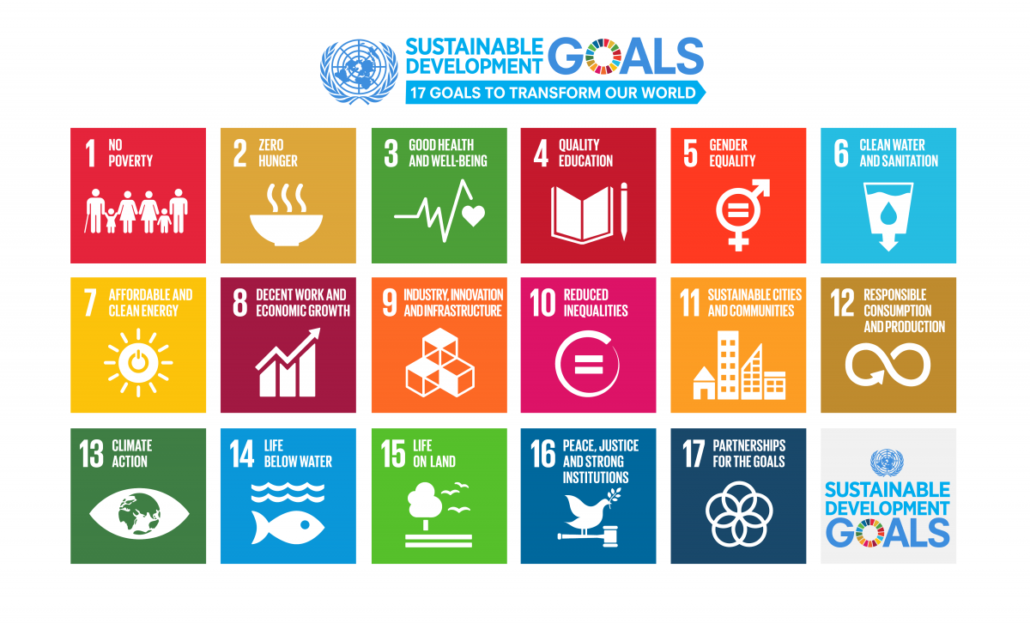
 

The Sustainable Development Goals represent the Crises facing the world over the next 30 years. As investors, we see Crisis and Opportunity as two sides of the same coin, so we use the SDGs to guide our investment process when deciding which companies to include in our portfolios.

In September 2015, the global community committed to adopt a set of goals – the SDGs – to end poverty, protect the planet and ensure prosperity for all as part of a new sustainable development agenda. Each goal has specific targets to be achieved over the next 15 years.

 The UN Commission on Trade and Development (UNCTAD) has estimated that meeting these targets will require US$5-7 trillion in investment each year from 2015-2030. But the UN and member countries cannot deliver on the SDGs alone; only an estimated US$1 trillion annually will come from public funds, leaving a gap of US$6 trillion annually for private capital to fill.

Achieving the SDGs is at the core of the responsible investment agenda over the next ten years. The investment case for doing so is clear:

  • investors who integrate the SDGs in their investment strategies will potentially retain competitive advantage;
  • value could be at risk if the SDGs aren’t achieved;
  • risks associated with the SDGs can be financially material;
  • achieving the SDGs will be a key driver of global GDP growth over the next 15 years;
  • aligning investments with the SDGs could result in improved risk-return profile of investee businesses;
  • aligning investments with the broader objectives of society is ultimately in the interest of beneficiaries, clients and future generations – and is something that consumers are increasingly demanding.

The Principles for Responsible Investment Mission calls on signatories (like us) to play a role in creating a sustainable global financial system which will “reward long-term, responsible investment and benefit the environment and society as a whole.” The preamble to the six Principles recognises that applying the Principles in investment decisions not only supports long-term value creation but may also better align investors with the broader objectives of society – in other words, the SDGs.

Many investors believe that investments in companies will only be profitable over the long term if the global financial system and societies grow in a sustainable and equitable way. And while responsible investment has typically focused on how ESG factors affect the risk-return profile of investment portfolios, it has tended to overlook how it supports the broader objectives of society.

As such, the SDG agenda requires signatories to move from a mere process-based approach of material ESG integration towards an outcomes-based approach that, while aiming to achieve market-rate return on investment, explicitly aims to contribute to the sustainability challenges put forward by the SDGs.

The PRI’s 1,700 signatories represent around one third of global private capital. To meet the SDG challenge, they would have to invest US$2 trillion annually in companies and other investments that directly link to positive SDG outcomes. By 2030, the deadline proposed by the UN, that should amount to cumulative 25% of assets under management having a direct positive contribution to the SDGs. These new flows of private sector capital will be crucial to meeting the global challenges put forward by the SDGs.


To help align our investment decisions and our own work with the SDGs we are in the process of:

  • developing an SDG program to align our responsible investment practices with the SDGs;
  • integrating the SDGs into our work on public policy, investment practices, engagement and the UNPRI Reporting Framework
  • defining our position in the SDG landscape and collaborate with relevant organisations;
  • developing a Sustainable Financial System program;
  • providing guidance to other firms and individuals on how to integrate the SDGs in investment strategies, policies and decisions;
  • integrating the SDGs in active ownership;
  • promoting improved disclosure on ESG issues and the SDGs by companies and other entities;
  • providing information on the SDGs to create awareness and education, as well as promoting research (scroll down to see some);
  • promoting investor collaboration on the SDGs.

The Data

ESG Data is the foundation of our process. By evaluating companies from this perspective, we hope to uncover hidden risks, and invest in companies that have good long term growth prospects, while avoiding companies that practice risky behavior.

Think of it this way: If you had two friends, one of whom went to bed at a reasonable hour every night and the other who stayed out all night partying, which one would you want to pick you up from the airport after a red-eye flight?

Go deeper into our process here.

Environment

  • climate change
  • greenhouse gas (GHG) emissions
  • resource depletion, including water
  • waste and pollution
  • deforestation

Social

  • working conditions, including slavery and child labor
  • local communities, including indigenous communities
  • conflict
  • health and safety
  • employee relations and diversity

Governance

  • executive pay
  • bribery and corruption
  • political lobbying and donations
  • board diversity and structure
  • tax strategy

The idea is to use ESG data to uncover material risks to a company’s business that might not be obvious to traditional financial analysis. Dig deeper into our process from our partner, the Sustainability Accounting Standards Board, and play with their Materiality Map here to see how different ESG metrics can be applied to different economic sectors.

Impact through Shareholder Advocacy


Lever, a film by: Stephen Lamb. Originally presented at the ESG &Impact Film Festival, December 2019.
Watch the rest of the festival here.

When you own stock in a company, you have a say in how that company is run. By using this power and collaborating with other investors, we can add our collective voices to the movement to create change at scale.

This video will introduce you to some of our partners, discuss a few of their victories, and give you a good idea of the process we use to create change in the companies we invest in.

Our activism is guided by our clients, so please tell us what matters to you and we’ll find ways to support your values through our membership in groups like the Principles for Responsible Investment, where we can engage directly, and USSIF, where we can work on public policy.

Our portfolios are built out of stocks and bonds (the exact mix is based on each client’s tolerance for risk). When we pick bonds to include in our portfolios, we work with our clients to pick Impact Themes to support, and by working together, we can meet the minimums for targeting as a firm, even if our clients can’t meet the minimums as individuals. Hover your mouse over the icons to the left to see a description of some of the themes we’re currently working with. From our partners at Community Capital Management

Impact through Fixed Income

(Bonds)


Take a look at how the data can be used to create an investment process that integrates our values with traditional financial metrics. You can even play with the data yourself. 

Curbing Climate Change through Shareholder Advocacy

  • This is what a tropical rainforest should look like. Tropical rainforests sequester carbon emissions, provide habitat for endangered species, and support local populations.

  • -Palm oil is an inexpensive and highly versatile vegetable oil derived from the fruit of the oil palm tree.

    -Palm oil is the most widely used vegetable oil in the world. It appears in half of the consumer goods on U.S. supermarket shelves, including cereal, crackers, soap, shampoo, and detergent.

    -It is also the highest-yielding vegetable oil crop, using less resources to produce oil than other crops. -Clearing forests for palm oil production has pushed Bornean orangutans and Sumatran elephants and tigers to the brink of extinction.

    -As a petroleum alternative, palm oil can power vehicles, heat homes, and manufacture plastic.

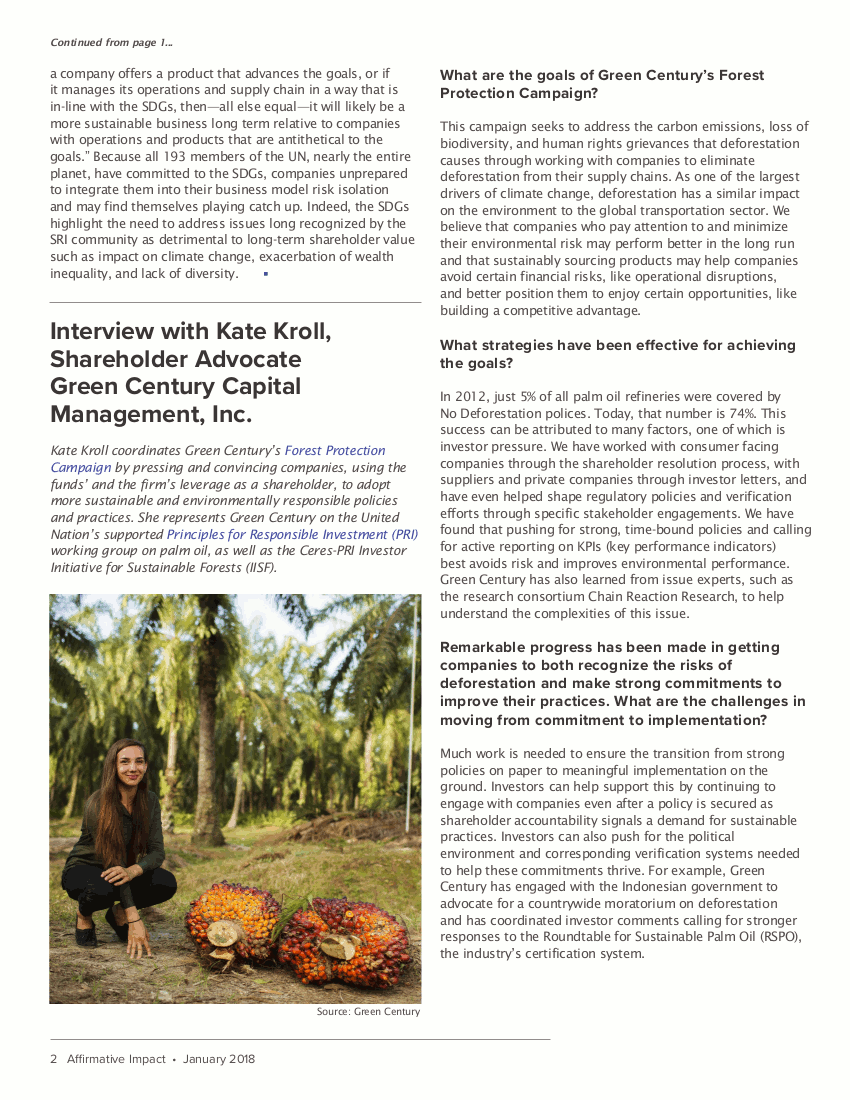
    -These “Bunches” can be up to 30LBs!

  • Our Partners have also worked with Asia’s largest Agribusiness, which is also the world’s largest palm oil producer

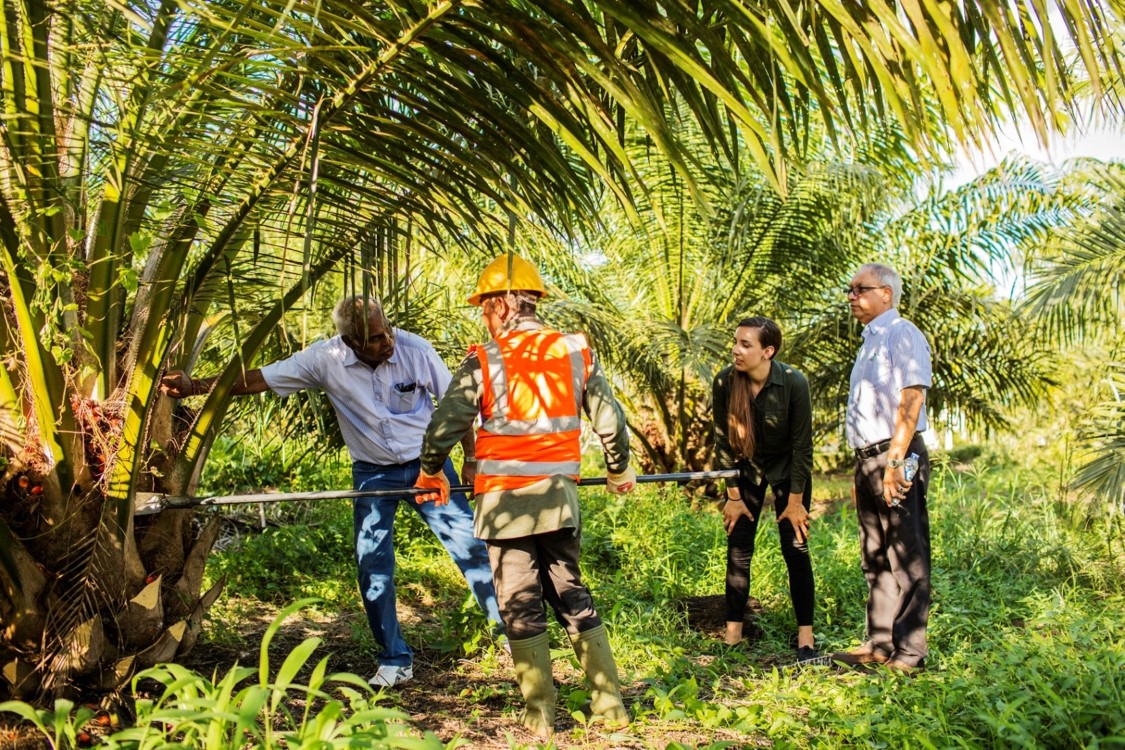
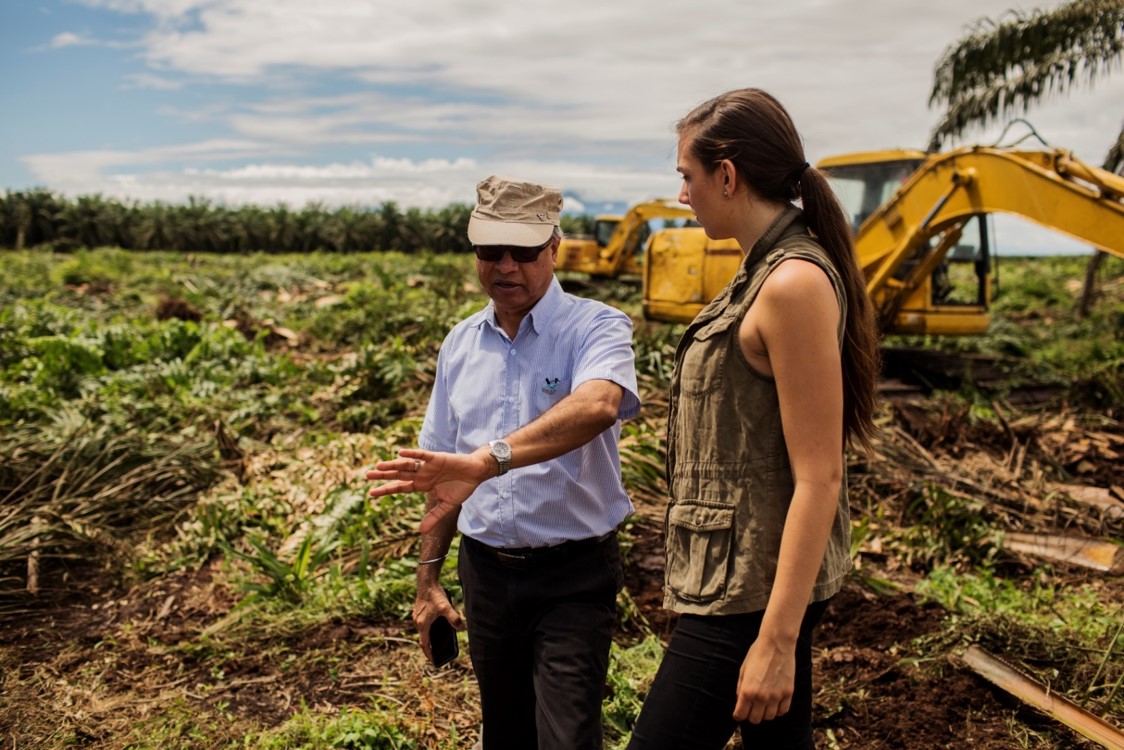
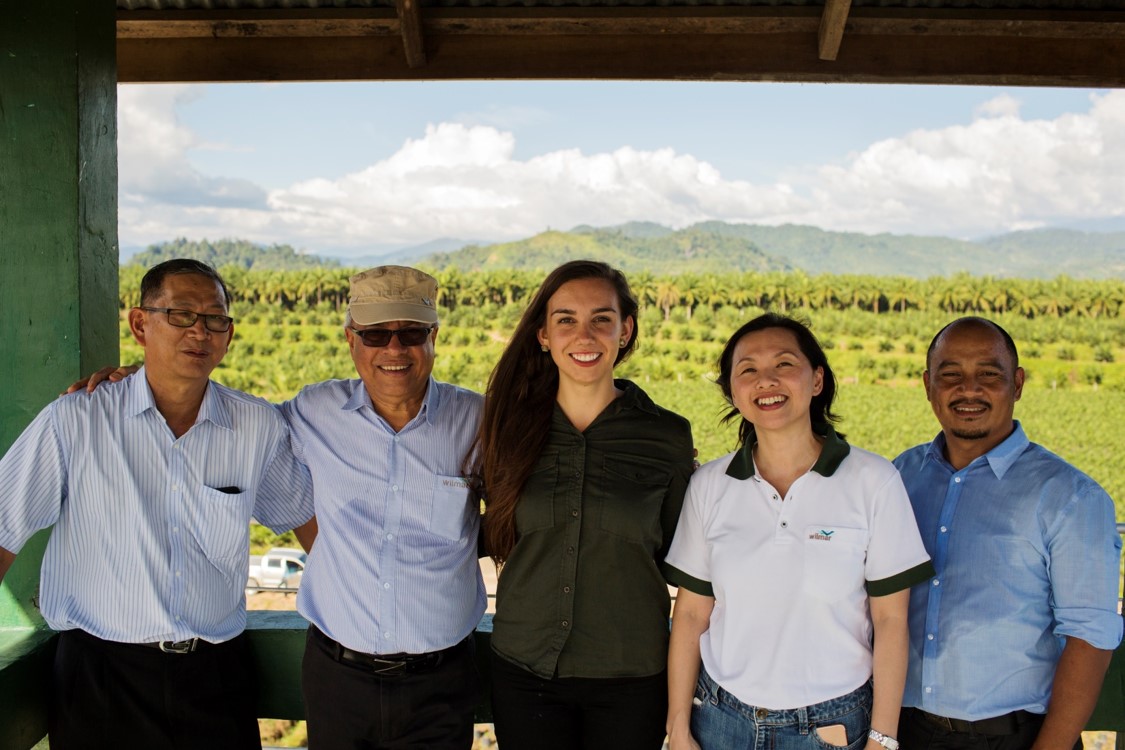
  • In 2017, Green Century shareholder advocate Kate Kroll went to Indonesia to ensure the company was implementing its zero-deforestation commitments. These typical “fresh fruit bunches” hold hundreds of kernels that contain palm oil.

  • Under its new policy, the company now cuts down harvested trees and composts them into the soil rather than burning new land to create plantations.
    Pictured: plantation manager explaining new process, Sumatra 2017

  • Palm oil tree seedlings are then moved from the nursery to these reclaimed plots of land.

  • These Sustainable fields have experienced higher yields since implementing the new policies, providing a strong business case for other companies as well

  • The new global policy will keep 1.5 Gigatons of carbon out of the atmosphere between 2014 and 2020.

  • Read an interview with Kate in the January 2018 issue of Affirmative Impact

From our partners at

Some of our clients want to divest entirely from fossil fuels. As Fiduciaries, our job is not to tell our clients which values to express in their portfolios, but to facilitate their access to investments that fit their values, goals an needs. If you’re interested in divesting, make sure to let us know when you book an appointment!

Read the Research


Read the Return On Equality report that we pulled this graphic from.

This report on the Current State of Women in the Workplace 2017 from LeanIn and McKinsey & Co does a great job of highlighting the problem.

This Report from Deloitte lifts the hood on why this problem exists, and proposes a path forward that we agree with.

One of our favorite pieces, this report from Credit Suisse brings this all together and looks at the impact of increased diversity. be warned, it’s a long one and not for the faint of heart.

©Copyright - Common Interests, LLC 2022
Common Interests, LLC is not a registered broker-dealer nor a registered investment advisor.
Common Interests, LLC and Vanderbilt Financial Group are separate and unaffiliated entities
Vanderbilt Financial Group is the marketing name for Vanderbilt Securities, LLC and its affiliates.
Securities offered through Vanderbilt Securities, LLC. Member FINRA, SIPC. Registered with MSRB. Clearing agent: Fidelity Clearing & Custody Solutions
Advisory Services offered through Vanderbilt Advisory Services. Clearing agent: Fidelity Clearing & Custody Solutions
Insurance Services offered through Vanderbilt Insurance and other agencies
Supervising Office: 125 Froehlich Farm Blvd, Woodbury, NY 11797631-845-5100
This communication is strictly intended for individuals residing in the state(s) of AZ, CA, CO, CT, DE, FL, ME, MD, MA, MI, NH, NJ, NC, PA, VA, & WA. No offers may be made or accepted from any resident outside the specific states referenced. Common Interests does not provide Tax or Legal advice. Consult a qualified professional on tax and legal matters.

For additional information on services, disclosures, fees, and conflicts of interest, please visit https://www.vanderbiltfg.com/disclosures

Links to outside websites are provided as a convenience and for informational purposes only. The links are not part of Vanderbilt Financial Group. This web site, and the links to outside web sites does not mean that Vanderbilt Financial Group endorses or accepts any responsibility for the content, or the use, of the web site. Vanderbilt Financial Group does not guarantee the sequence, accuracy or completeness of the data or other information appearing on the linked pages. The company assumes no liability for any inaccuracies, errors or omissions in or from any data or other information provided on the pages, or for any actions taken in reliance on any such data or information.

- Enfold Theme by Kriesi
Skip to content